泡沫之夏
Chinese conservationist explores community-based wildlife protection in Kenya_我的网站

A | (ECNS) -- Days of torrential rain have triggered severe flooding in Longzhou County, Guangxi Zhuang Autonomous Region, cutting road access to multiple villages and leaving residents isolated. Rescue teams have been using boats in relay operations to deliver emergency supplies to stranded residents, local authorities said. The flooding in Shangjin Township has affected 1,479 households, or 3,719 people, according to Hou Yong, a local official. As of 9:30 a.m. Tuesday, 27 village settlements in the township had been cut off due to damaged roads. Power supplies had been disrupted in 22 settlements, while four had lost internet access and 14 were without running water. Floodwaters had entered 329 homes, affecting 902 people, while more than 20,000 mu (about 1,333 hectares) of cropland had been submerged. All residents of the flooded homes had been evacuated and relocated in advance, Hou said. More than 60 rescuers were mobilized in Shangjin Township on Tuesday, using assault boats and inflatable dinghies to establish emergency water-and-land supply routes. Meng Lichun, head of Shangjin Township, said most stranded villagers had moved to the upper floors of their homes and did not require large-scale evacuation. The immediate priorities were delivering daily necessities and providing emergency medical assistance to critically ill patients, she said. Rescue teams aimed to complete supply deliveries to remote villages before nightfall. The local emergency command post had three assault boats at its disposal, with two used to transport supplies and one kept on standby for emergency response. At 5:30 p.m., rescuers reached Huashan Tun, where residents who had been stranded by floodwaters finally received relief supplies. "I'm 54 years old, and I've only seen flooding this severe once before, in 1986," said villager Huang Xuhua. The water rose rapidly, Huang said. After the village lost power, refrigerators stopped working, raising concerns among some residents about food shortages. The timely arrival of government supplies had helped ease the immediate difficulties, he added. Fu Quan, a township official, said rescue teams distributed milk, bread, porridge, bottled water and other necessities based on the needs of affected villages. Authorities had issued early warnings ahead of the flooding, advising residents to move electrical appliances and gas canisters to upper floors. Personnel were also assigned to purchase and deliver supplies to elderly residents, people who were ill and those with limited mobility. Emergency supply coverage had been secured for all six affected settlements in Yunjiang Village. Medicines for remote communities were being delivered by drone and assault boat to ensure residents' basic medical and daily needs were met. "We have successfully transferred three patients with uremia over the past two days and taken them to Longzhou County People's Hospital for dialysis," Meng said. (By Zhang Dongfang) 
 。
。
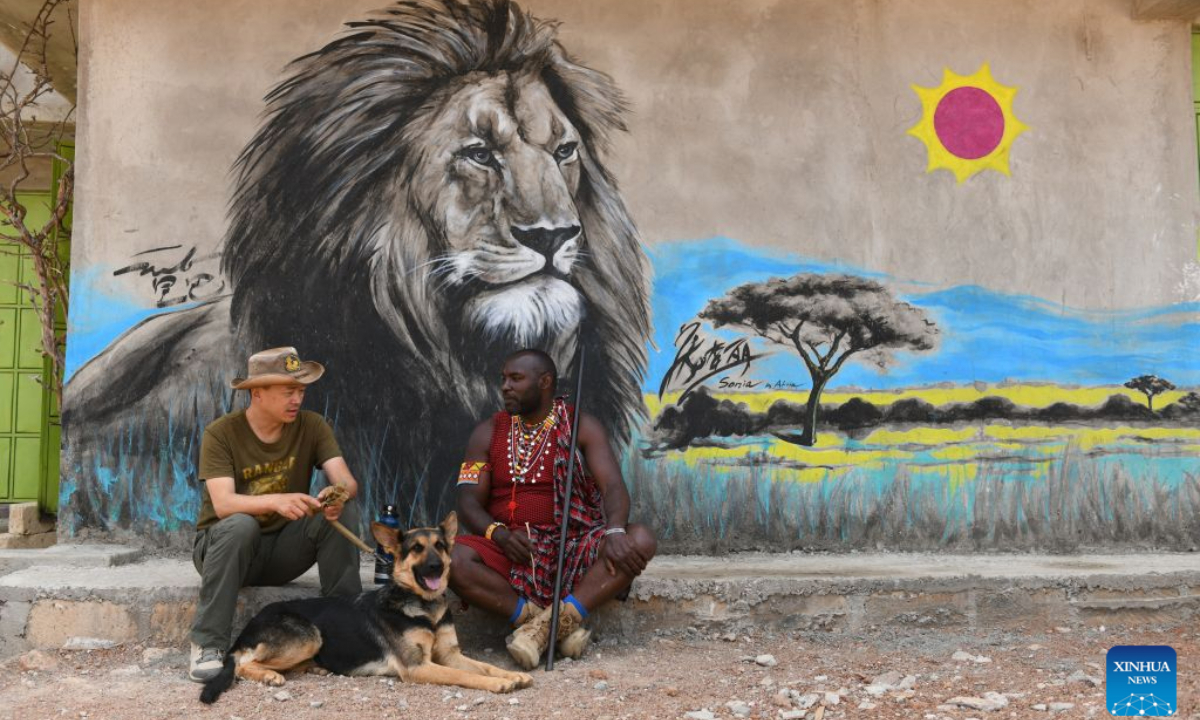
Among them is Chinese conservationist Zhuo Qiang, nicknamed "Simba," the Swahili word for lion. For him, this early-morning routine is driven by a broader mission to achieve human-wildlife coexistence.
In 2010, Zhuo left his job in China at the age of 37 and embarked on a less-traveled path: pursuing wildlife conservation in Kenya.
Without professional training in wildlife conservation, he found himself in a territory then dominated by Western organizations and local practitioners.
But Zhuo decided to stay. "I wanted to prove that Chinese people could also do wildlife conservation," he said.
Initially, Zhuo saw conservation largely through the lens of wildlife science: working in the field, studying animals and collecting data.
Living and working with Maasai communities changed that perspective. "The fate of wildlife was closely tied to the people sharing the same land," he said.
In the Maasai Mara ecosystem, livestock grazing is deeply connected to the livelihoods of pastoral communities. "If local people are asked to stop grazing but are given no alternative source of income, conservation cannot be sustainable," Zhuo said.
That principle laid the foundation for his work with the local community in establishing the Ol Kinyei Conservancy.
The area had suffered from prolonged overgrazing, with plants and the land itself deteriorating. Under the conservation model, local grazing land was leased and gradually restored, allowing vegetation to recover and creating a more suitable habitat for wildlife, said Zhuo.
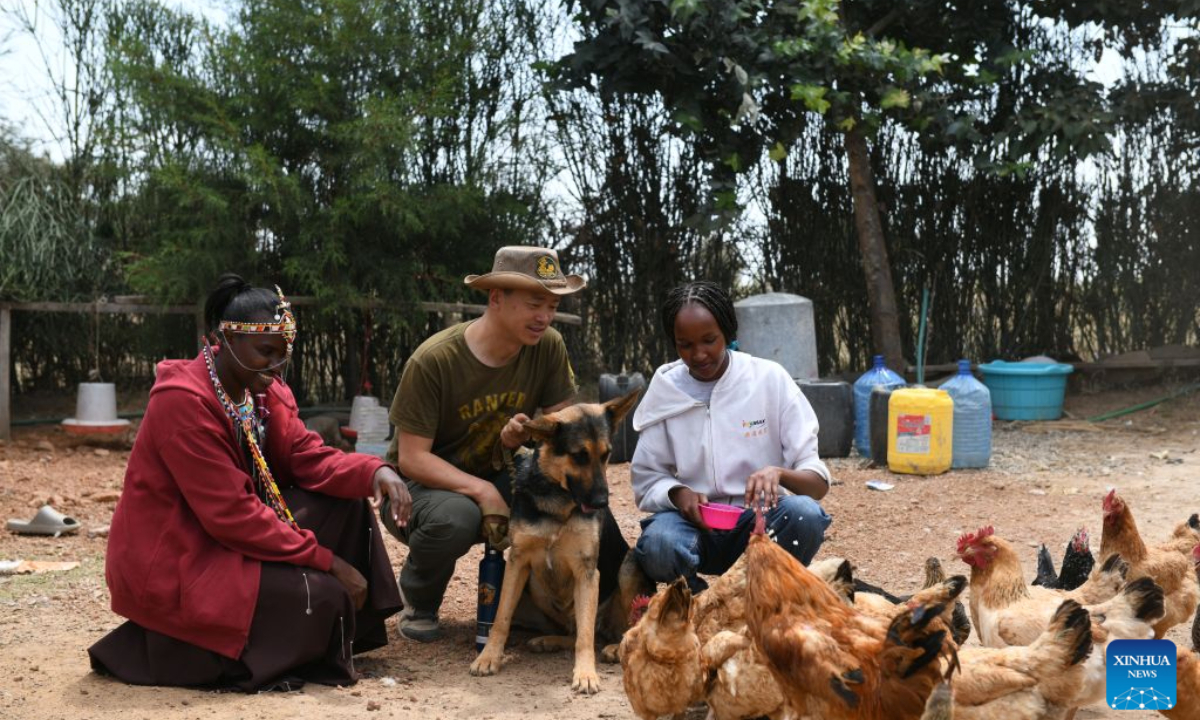
Meanwhile, households participating in the scheme receive land-rental income and have access to jobs such as wildlife rangers and tourism workers. Their average annual income has increased from around 500 U.S. dollars to about 3,700 dollars, according to Zhuo.
Some residents from surrounding communities also learned from the experience and brought the approach back to their own grazing areas.
Nowadays, 26 private conservancies have been established around the Maasai Mara National Reserve, covering about 1,600 square km, according to Zhuo.
He believes the network of community conservancies provides additional safe space for wildlife to move and survive, extending conservation efforts beyond the boundaries of a single national reserve and into surrounding communities.
Simon Msago, a Maasai community leader in Ngoswani, said Zhuo's work encouraged more residents to take an active role in conservation.
In the past, many residents saw few direct benefits from wildlife conservation and had limited awareness of its importance. Today, community members are increasingly willing to work as rangers and protect wildlife, creating an effective layer of protection around the conservancies, Msago said.
"Human-wildlife conflict cannot be solved simply through restrictions and prohibitions. The key is to create alternative sources of income so that residents can gain tangible benefits from conservation," Zhuo said.
"That is what makes community-based conservation sustainable -- allowing local people to become part of wildlife conservation rather than bystanders with no stake in it."
While continuing his work in the Maasai Mara, Zhuo has also sought to strengthen exchanges between China and Africa in wildlife conservation.
In recent years, he has visited more than 30 nature reserves and national parks in China, sharing his experiences of community-based conservation in Africa with Chinese counterparts.
"Conservation practices in China and Africa each have their own characteristics, and there is much that the two sides can learn from each other," he added.
。
Current article:http://y2jzhp.fanfutaopoulaxiong.pics/zbvk38v/20260826/4180.html
Published on:19:48:22